


HYMTF News
Ford Set To Lose Ground To Hyundai In Q3 Sales, Says Cox Automotive — ‘Detroit 3’ Market Share Seen Hitting Record Low
Cox expects Ford’s Q3 sales to decline 7.1% and Hyundai’s to rise 6.5%.

Ford Set To Lose Ground To Hyundai In Q3 Sales, Says Cox Automotive — ‘Detroit 3’ Market Share Seen Hitting Record Low
Cox expects Ford’s Q3 sales to decline 7.1% and Hyundai’s to rise 6.5%.

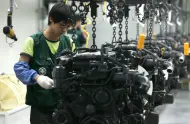
The footage highlights Hyundai’s progress in moving humanoid robotics into real manufacturing environments ahead of its CES 2026 showcase.

The recall includes model year 2022-2024 Tucson multipurpose passenger vehicles equipped with an optional Mobis tow hitch wiring harness.

The dispute erupted after the Dutch government seized control of Chinese-owned Nexperia over security concerns, triggering retaliation from Beijing and raising fears of another supply shock for the auto industry.

The July accord set a 15% tariff on Korean goods, but Washington has yet to finalize implementation, leaving Korean automakers disadvantaged compared to Japan.
South Korea is reportedly in talks with the U.S. to minimize any impact on the onshore currency market from its $350 billion investment package.
The Sept. 4 immigration sweep at a Hyundai–LG battery plant in Georgia has rattled investor confidence, delayed construction by months, and stirred diplomatic tensions between Washington and Seoul.

South Korea said it has reached a deal with Washington to free its citizens detained in last week’s Georgia raid, with a charter flight expected to bring them home once paperwork is completed.
The strikes mark Hyundai’s first major wage-related walkout in seven years, with plants in Ulsan, Jeonju, and Asan among those hit by the partial stoppages.
The expanded commitment is expected to generate 25,000 direct jobs by 2028, supported by projects ranging from a new steel mill in Louisiana to a robotics hub with an annual capacity of 30,000 units.